The Belt Placement Mistake That Visually Shortens Your Legs (If You Have a Shorter Torso)
Quick Answer: For a shorter torso, a belt worn exactly at your natural waist can visually split your body in the wrong place, shortening the legline. Shifting the belt slightly higher, closer to your ribcage, elongates the leg visually instead.
You put on the same belt everyone recommends for ‘defining your waist,’ and something feels visually off — legs look shorter, proportions feel compressed. For a shorter torso specifically, natural waist placement isn’t always the flattering default it’s marketed as.
Why does natural waist belt placement backfire for a shorter torso?
A shorter torso means your natural waist sits proportionally higher relative to your overall height than average — placing a belt there can visually split your body closer to 40/60 (short top, long bottom) in a way that reads as leg-shortening rather than leg-lengthening, since the eye anchors hardest at a cinched point.
What placement actually helps instead?
Shifting the belt or waistband slightly higher, closer to the natural ribcage taper, shifts the visual split point higher on the body — which reads as more torso length and a longer leg line below it, the opposite of the natural-waist effect.
Myth vs Fact: Belt Placement for Proportions
Myth: A belt should always sit at the natural waist for every body. Fact: The ‘flattering’ waist placement is proportion-dependent, not universal — shorter-torso bodies often benefit from a slightly higher placement than standard styling advice assumes.
Myth: Any high-waisted bottom automatically looks good with any belt height. Fact: The belt and the waistband should generally align — a mismatch between a high-rise bottom and a low-slung belt reintroduces the same visual split problem.
Myth: Wide belts always shorten the torso further. Fact: A wide belt at the correct (higher) placement can look fine — width matters less than vertical position for this specific proportion issue.

How do you find your correct belt placement without guessing?
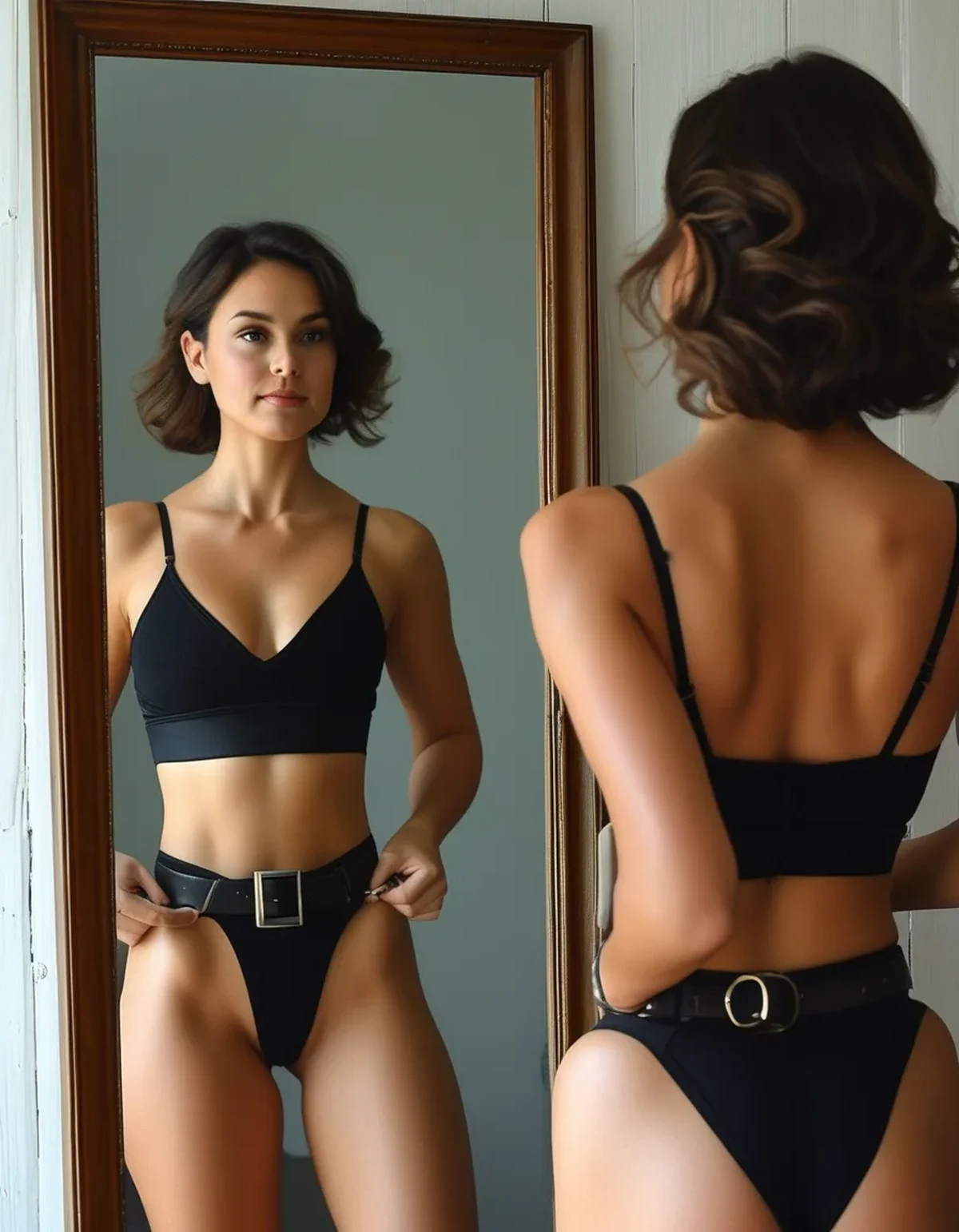
Stand sideways in a mirror and try the belt at 2-3 slightly different heights, an inch apart. The correct one is usually where your legline visually looks longest and most continuous, not necessarily where it feels most ‘natural’ by touch.
Does this apply to dresses and jumpsuits too, not just separates?
Yes — a belted dress follows the exact same principle. If a wrap dress or belted jumpsuit is cinching at your natural waist and legs look shortened, try shifting the tie or belt up slightly before assuming the garment itself is unflattering.
FAQ: Proportion Styling Questions, Answered
Is this the same advice as ‘high-waisted pants are universally flattering’?
Related but more specific — it’s about the actual cinch or visual break point, not just the rise of the pant itself.
Does heel height interact with this belt placement effect?
Somewhat — a higher heel elongates the leg independently, which can make belt placement feel less critical, but the underlying proportion principle still holds.
Should petite-specific brands already account for this?
Some do design higher rise as standard, but placement still varies by piece — it’s worth checking on each specific garment rather than assuming any petite label solves it automatically.
TL;DR:
- A belt at the exact natural waist can visually shorten legs on a shorter-torso body
- Shifting the belt or waistband slightly higher elongates the leg line instead
- Test 2-3 placements sideways in a mirror rather than relying on ‘natural’ feel
- The same principle applies to belted dresses and jumpsuits, not just separates
A half-inch shift in belt placement can change the whole proportion read — worth testing before assuming a piece doesn’t work for you.
Keep Reading
This article is for general informational and styling purposes only. Fit, sizing, and product availability may vary.
