Why a Long Cardigan Works on a Short Torso When a Long Coat Doesnt
Quick Answer: An open cardigan creates two long vertical lines with your body visible between them, so the eye reads the uninterrupted centre column and the torso appears longer. A buttoned coat of identical length creates one solid block with a horizontal hem cutting across it, so the eye reads the block and the torso appears shorter. The variable is not length - it is whether the garment is open down the front and whether your waistline is still visible.
Once you see that, most short-torso styling rules stop needing to be memorised.
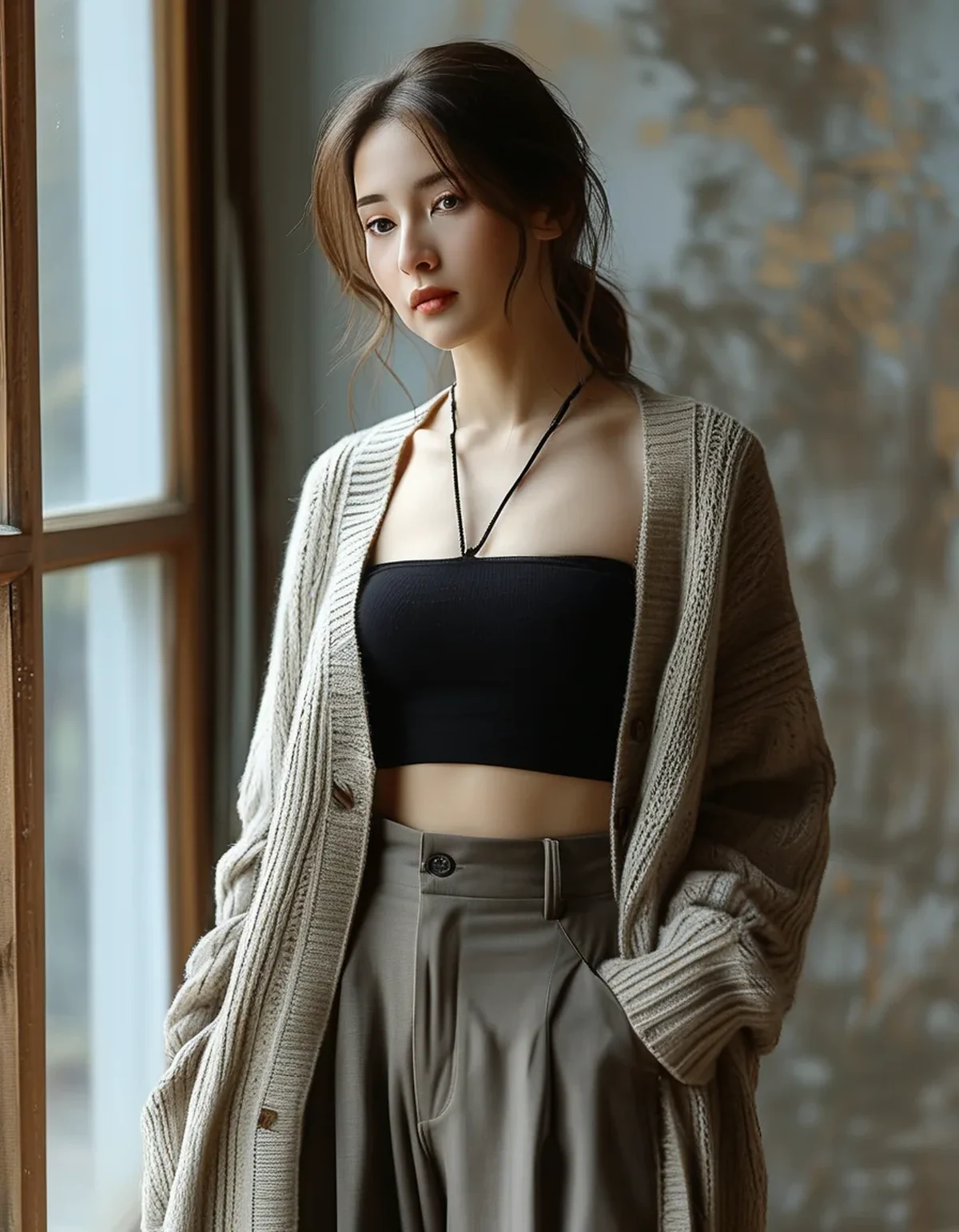
What is the open vertical line actually doing?
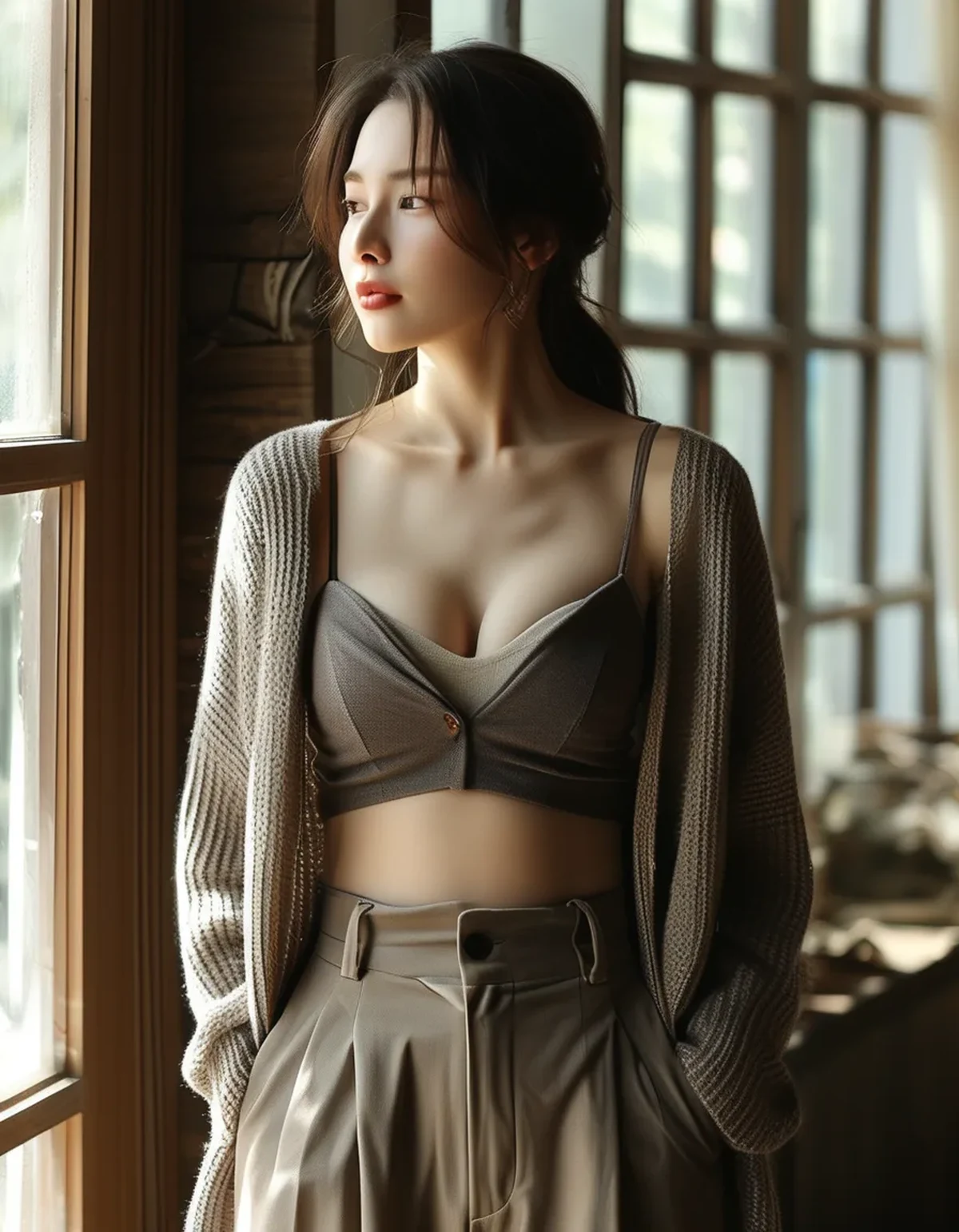
Your eye follows unbroken lines and stops at horizontal breaks. An open cardigan gives two continuous vertical edges running from shoulder to hem, and nothing crossing them. The eye travels the full length in one movement.
Between those edges, your actual outfit is visible. A fitted top and a high waistband stay on show, so the waist still registers - which is the thing a short torso needs most. The cardigan frames the proportion rather than replacing it.
A buttoned coat removes both features at once. The vertical edges disappear into a closed front, and the waist is covered. What remains is a rectangle ending in a horizontal hem across the widest part of the silhouette.
The hem is where the eye lands, and that becomes your apparent proportion. A coat hitting mid-thigh reads as a torso ending at mid-thigh, which is exactly the compression a short torso does not need.
This is also why an unbuttoned coat behaves like a cardigan. The garment did not change; the line did. Wearing a coat open, with a belt over the top rather than through the loops, recovers most of the effect - and that single habit does more than choosing a different coat.
Does coat length matter at all, then?
It matters, but far less than open versus closed. A closed coat at any length still creates the block; length only decides where the horizontal lands.
The worst closed length for a short torso is mid-thigh to just above the knee - it splits the body near the middle and shortens both halves. Longer is generally safer than mid-length, because a coat ending near the ankle reads as one long column rather than a division.
Cropped lengths work when they land above the natural waist, not at it. A jacket ending right at the waistband draws a horizontal exactly where you want length. An inch or two higher reads as intentional and leaves the waistband visible.
The failure zone is the hip. A garment hem landing at the widest point of the hip creates a horizontal at the widest horizontal, which is the least flattering combination available regardless of torso length.
And there is a seasonal version of this. As you shift into a real coat for autumn, the coat you can wear open is the one that will actually work - which usually means one with a defined collar and a belt you can tie rather than buckle at the exact waist.
Myth vs Fact: Short Torso Rules
Myth: short torsos should avoid long layers. Fact: long layers are among the best tools available - if they are open. The rule was written about closed silhouettes and then over-applied.
Myth: high-waisted everything is always the answer. Fact: high waists help by lengthening the leg line, but a very high rise on a short torso can leave almost no visible torso at all, which reads as compressed rather than long. Mid-to-high, with a visible sliver of torso above it, usually beats maximum rise.
Myth: tucking in always lengthens the leg. Fact: a full tuck sets a hard horizontal at the waistband. A front tuck or half tuck creates a diagonal instead, which is softer and does not chop the torso in one line.
Myth: vertical stripes fix everything. Fact: stripes on a closed garment still end at a hem. The garment’s structural line beats its print every time - an open solid cardigan does more than a closed striped coat.
Myth: belts are bad for short torsos. Fact: belts are excellent, but narrow ones worn slightly above the natural waist - a wide belt covers the very torso length you are trying to show.
Myth: it is about being tall or short overall. Fact: torso-to-leg ratio is independent of height. Plenty of tall people have short torsos, which is why height-based advice so often fails them.
How do I make a coat work when I have to close it?
In January you cannot style around the weather, so change what the closed coat does. The goal is to break up the block and move the horizontal.
Choose a coat with a defined waist seam - a belted wrap or a coat with a seam at the natural waist. That seam replaces the hem as the horizontal your eye reads, and it lands where you want it rather than at mid-thigh.
Belt over the coat, above the natural waist. Even a coat without a belt takes an external one, and this is the single highest-impact fix for a closed silhouette. Narrow belt, slightly high.
Use a contrasting scarf as a vertical. A long scarf hanging down both sides, not wrapped horizontally, reintroduces the two vertical lines that closing the coat removed. It is doing the cardigan’s job.
Keep the closure column visible. A coat where the buttons and placket create a visible centre line reads longer than a smooth concealed-placket coat. Contrast buttons help; a hidden zip does not.
And choose length deliberately once closed. If it must be shut all winter, go long enough to read as a column rather than mid-thigh, which is the length that splits you.
One thing to skip: trying to fix a closed mid-thigh coat with heels or hem adjustments. The problem is the horizontal, and neither of those moves it.
What else follows from the open-line principle?
Open shirts over a fitted layer follow the same rule. An unbuttoned shirt worn as a light jacket is a cardigan structurally, and it works for exactly the same reasons.
Long open waistcoats work; buttoned ones usually do not. Same garment, same length, and the outcome flips on the closure. This is the clearest possible demonstration of the principle.
Necklines are the small version of the same idea. A V-neck or open collar continues the vertical into the upper torso; a high crew neck sets a horizontal at the collarbone. With a short torso, every horizontal you remove is length gained.
Monochrome extends the column. Same colour top and bottom removes the horizontal created by a colour change at the waist, which is why a monochrome base under an open layer is the strongest short-torso formula there is.
And the jacket you already own may be fine. Before buying anything, try wearing your existing coats open with a belt over the top for a week. Most people find one or two work immediately and one is genuinely unsalvageable - and now they know which.
The whole thing in a sentence: keep the front open, keep the waist visible, and put horizontals above the natural waist rather than at the hip or mid-thigh.
FAQ: Short Torso Proportion Questions, Answered
Why does the same coat look fine on my friend and wrong on me?
Most likely a torso-to-leg ratio difference rather than a height difference. A closed coat hem lands at a different proportional point on each of you even at the same overall height.
Should I only wear cropped jackets?
No. Cropped works if it ends above the natural waist. Long open layers work too. The length that reliably struggles is closed and mid-thigh.
Is a belt over a coat too much?
It reads as deliberate styling, not fussiness, and it is the most effective single fix for a closed silhouette. Narrow rather than wide, and slightly above the natural waist.
Does this apply to blazers as well?
Exactly the same. An open blazer works as a vertical frame; a buttoned one with a hem at the hip is the classic problem case.
What about a puffer coat in winter?
Puffers are the hardest case because volume plus closure removes all the lines. Look for one with a drawcord waist or one long enough to read as a column, and skip mid-thigh entirely.
Do I need to change my trouser rise too?
Mid-to-high rise usually works best. Very high rises can leave so little visible torso that the effect reverses - keep a visible sliver of torso above the waistband.
TL;DR:
- Open front, visible waist. That is the whole principle - length is secondary.
- An open cardigan creates two verticals with your body between them; a closed coat creates one block ending in a horizontal.
- The failure zone is a closed hem at the hip or mid-thigh. Longer reads as a column; cropped works if it ends above the natural waist.
- When you must close the coat, belt it above the natural waist and hang a long scarf vertically to restore the lines.
- Monochrome under an open layer is the strongest formula available - it removes the horizontal at the waist entirely.
- Front tuck over full tuck, V-necks over high crews - every horizontal you remove is length gained.
Try your existing coats open with a belt for a week before buying anything. Most people find the answer is already in the wardrobe.
Keep Reading
This article is for general informational and styling purposes only. Fit, sizing, and product availability may vary.
