Why a Scarf Changes Short-Torso Proportion More Than Any Garment You Own
Quick Answer: The eye reads torso length from where the vertical line of your outfit is interrupted. A scarf sits at the top of that line and can either extend it downward - reading as a longer torso - or cut it horizontally at the collarbone, which compresses everything below. Long hanging ends read long; bulky wrapped volume at the neck reads short. Length and direction matter far more than the scarf’s colour or fabric. It is the highest-leverage item in an autumn outfit for exactly this reason.
Most proportion advice is about hemlines.
The top of the outfit does at least as much work.
Why does the neckline area control torso perception?
Because it is where the eye starts, and where it starts sets the reference.
The eye reads a figure top to bottom and looks for boundaries. The first strong horizontal it encounters becomes the top of the torso, visually - and everything below is measured from there.
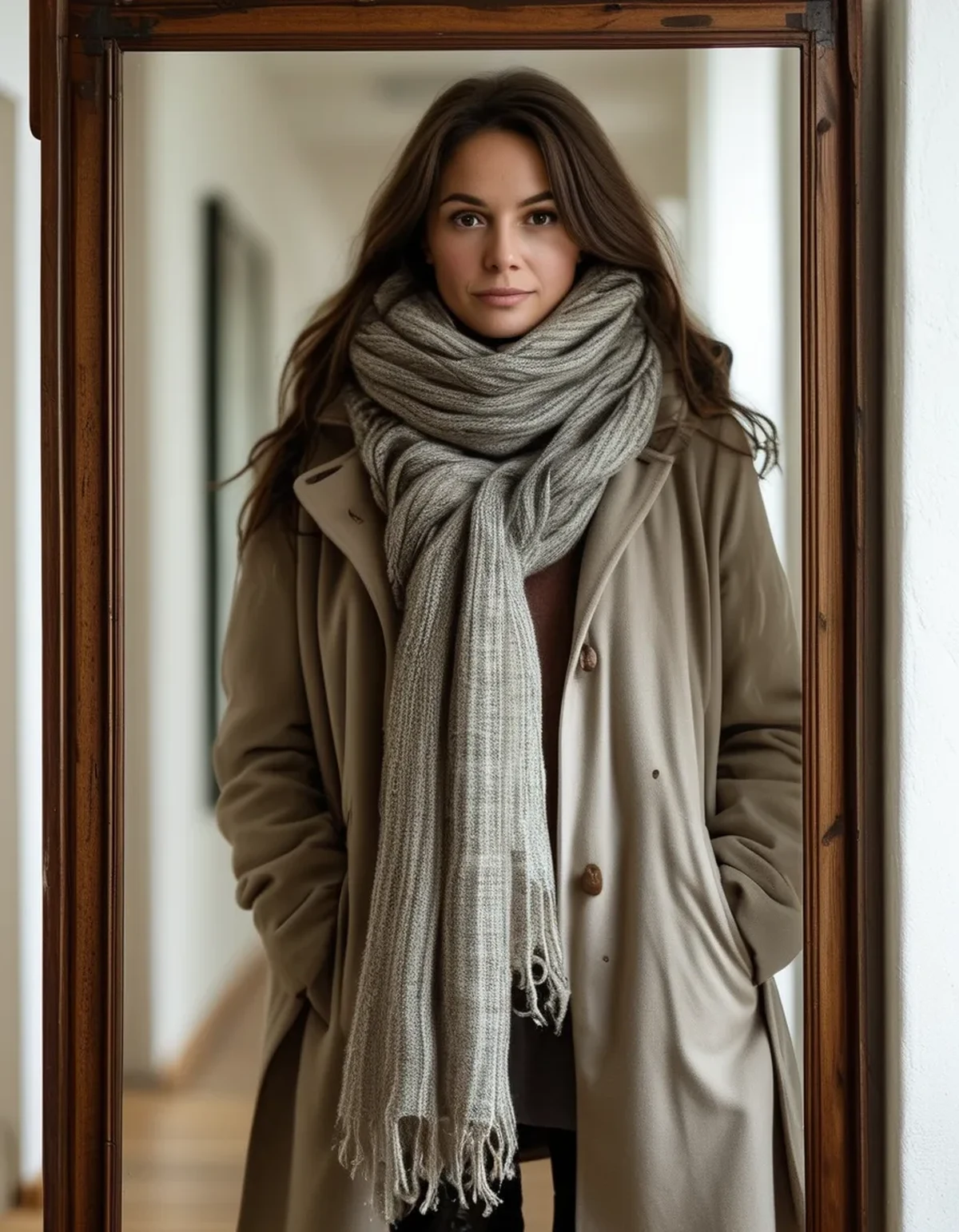
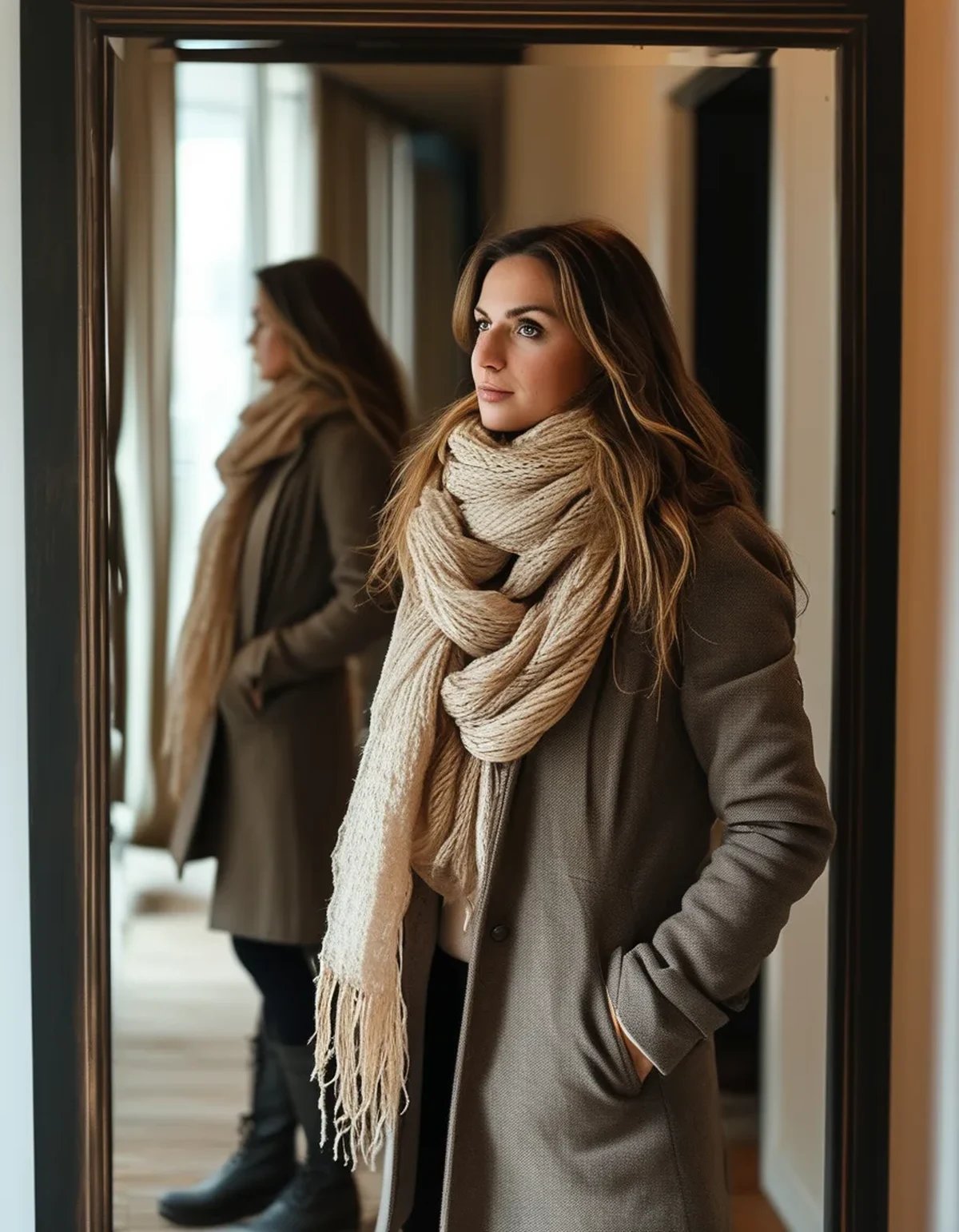
A bulky scarf creates a strong horizontal high on the body. It pushes the visual starting point of the torso downward to the base of the scarf, which shortens everything below it. On a short torso, this compresses an already short space.
Vertical lines do the opposite. A long scarf hanging down the front creates two continuous vertical lines, and vertical lines are read as length. The eye follows the line rather than stopping at a boundary.
Volume also adds width, which reads as shortness. A wide horizontal mass at the neck makes the upper body appear broader and therefore shorter, since proportion is relative.
And the scarf interacts with the neckline underneath. A scarf sitting over a high neckline stacks two horizontals, while the same scarf over a V-neck lets a vertical continue through.
This is why a scarf is such a powerful lever. Changing how you tie it takes ten seconds and changes proportion more than changing your jacket.
Which scarf styles lengthen and which shorten?
Five arrangements, from most lengthening to least.
Long ends hanging straight down, unlooped. The most lengthening arrangement there is - two uninterrupted verticals from the shoulder to below the waist. Ideal with a coat left open.
A single loose loop with long uneven ends. Keeps most of the vertical while adding a little interest, and the uneven ends avoid a symmetrical horizontal. Nearly as good as the first and more practical in wind.
A long scarf worn under a coat with ends inside. Creates a vertical channel of a contrasting colour down the chest, which is strongly lengthening and also warm. Underrated.
A snug double loop close to the neck. This is neutral to slightly shortening - it creates a horizontal but a small one, and it does not add much bulk.
A thick blanket scarf wrapped several times. The most shortening arrangement, adding both a strong horizontal and significant width at the highest point. Warm, cosy, and proportionally the hardest to wear on a short torso.
The rule underneath all five: length of hanging end beats everything else. A scarf whose ends reach below your natural waist gives you the vertical; a scarf that stops at the chest gives you a horizontal. When buying, buy long.
What else at the top of an outfit does this?
Four items, all working on the same principle.
Necklace length. A long pendant extends the vertical line down the torso, while a choker or short chain creates a horizontal at the collarbone. This is the same effect in miniature and it is genuinely visible.
Neckline shape. A V-neck or open collar continues the vertical downward; a crew or turtleneck closes it off with a horizontal. For a short torso, open necklines almost always read better.
Collar treatment on a coat. A wide lapel worn open creates two long diagonals reading as vertical; the same coat buttoned to the throat creates a horizontal. One coat, two proportions, decided by whether you button it.
Hair length and volume. Hair that ends at the collarbone creates a horizontal there, while longer hair or hair tucked behind the shoulders lets the neck and chest line continue. Not a garment, and a real factor.
And the interaction of all four is what matters, not any one. A turtleneck plus a short necklace plus a wrapped scarf plus collarbone-length hair stacks four horizontals in the same six inches - which is why an outfit can feel wrong without any single item being the culprit.
The practical version: allow yourself one horizontal in the neck area, not four.
What Nobody Tells You About Short-Torso Proportion
The waistband of your trousers matters less than the top of the outfit. Most advice concentrates on rise and belt placement, but the eye establishes torso length from the top down. Fixing the neckline area often does more than changing the jeans.
Contrast placement is a lever you already own. A colour break at the natural waist shortens the torso; the same two colours with the break at the hip lengthens it. No new clothes required, just a different pairing.
Layering in autumn stacks horizontals fast. A scarf, a cardigan hem, a jacket hem, and a top hem can create four horizontal lines within a foot of each other - and this is why autumn outfits are proportionally harder than summer ones.
Outerwear length is a bigger decision than anything underneath. A coat that ends at the widest part of the hip cuts the body at the least flattering point for most short torsos. Either shorter, above the hip, or considerably longer.
Photographs exaggerate all of this. A camera flattens depth, so a scarf that adds visible dimension in person reads as pure width in a photo. If an outfit works in the mirror and not in photos, this is usually why.
And the highest-return single change is usually going up one scarf length. A scarf twenty inches longer than the one you own changes every outfit you already have - and it costs less than a jacket.
FAQ: Scarf and Proportion Questions, Answered
How long should a scarf be for a short torso?
Long enough that the ends reach at least to your natural waist when hanging loose, and ideally below it. Roughly 70 inches or more works for most people - the standard 60 inch scarf is the one that tends to create horizontals rather than verticals.
Can I wear a blanket scarf at all?
Yes - just wear it differently. Draped open over a coat rather than wrapped, with the ends hanging long, it gives warmth without stacking bulk at the neck. The wrap is the problem, not the scarf.
Does this apply to hats too?
Indirectly. A hat does not sit on the torso, but a wide brim adds a horizontal above the shoulders which affects overall proportion. A beanie or a smaller-brimmed hat keeps the visual line narrower and is usually the easier choice with a short torso.
TL;DR:
- The eye establishes torso length from the first strong horizontal it meets - usually the neck area.
- Long hanging scarf ends create verticals that lengthen; bulky wraps create horizontals that shorten.
- Buy scarves around 70 inches or more so the ends reach below the natural waist.
- Necklace length, neckline shape, collar treatment, and hair length all do the same thing - allow one horizontal, not four.
- Autumn layering stacks horizontals fast, which is why the same wardrobe feels harder in October.
Try hanging your longest scarf straight down over an open coat tomorrow. It is the fastest proportion change available to you.
Keep Reading
This article is for general informational and styling purposes only. Fit, sizing, and product availability may vary.
