Why Necklace Length Does More for a Short Torso Than Any Jacket
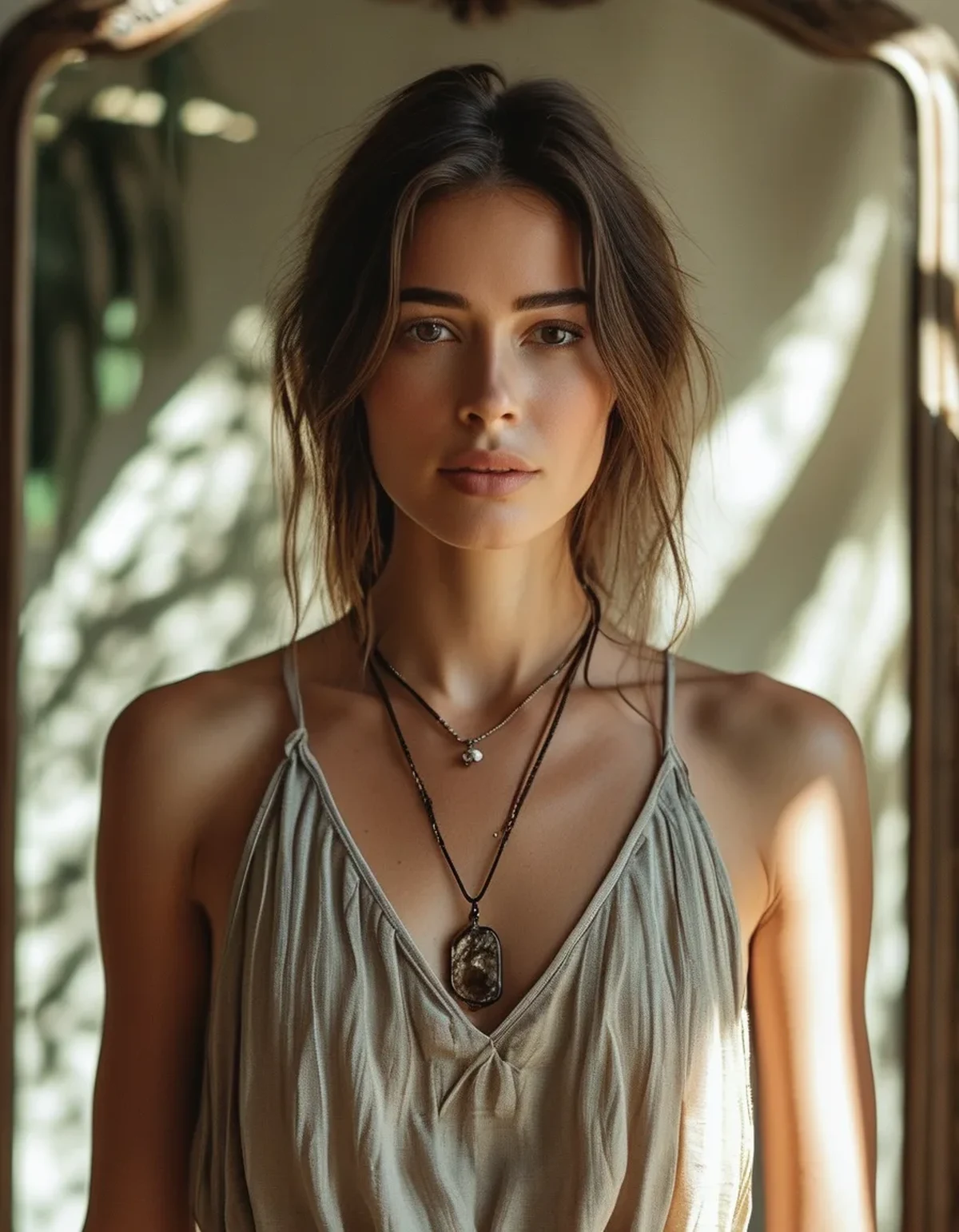
Quick Answer: A vertical line drawn down the center of your torso is read by the eye as torso length. A long pendant necklace creates that line directly, at zero cost, with no fit compromise — unlike a jacket, which changes proportion but also changes silhouette, shoulder line, and fit. For a short torso, moving from a 16-inch collar-length chain to a 28 to 32-inch pendant is the single highest-return styling change available.
Everyone with a short torso has read the same advice: high-rise bottoms, no cropped jackets, careful belt placement, do not tuck the wrong way. All of it is sound and all of it involves buying or altering something.
The vertical-line trick involves nothing you do not already own, and its effect is comparable to a well-chosen jacket length.
Why does a vertical line change perceived torso length?
Because the eye reads uninterrupted vertical distance as length, and reads horizontal interruptions as boundaries.
A short torso appears short mostly because the distance between two visual boundaries — the shoulder or neckline at the top, the waistband at the bottom — is small. Anything that adds a horizontal line inside that space makes it look shorter still. A collar-length necklace, a chest pocket, a contrast band, a scoop that sits high — all of these introduce a boundary near the top of an already short zone.
A long vertical element does the opposite. It gives the eye a continuous path to travel down the center of the torso, and the length of that path becomes the perceived length of the region. This is the same principle behind the standard advice about open cardigans and long scarves, but a pendant does it more precisely and with less bulk.
The critical variable is where the necklace terminates. A necklace ending just below the collarbone creates a small horizontal loop high on the chest — the worst possible outcome. A necklace with a pendant ending at or below the natural waist extends the line all the way to the waistband and effectively merges the torso zone with the necklace’s path.
What length should you actually wear?
Longer than most people are comfortable with initially, and the specifics matter.
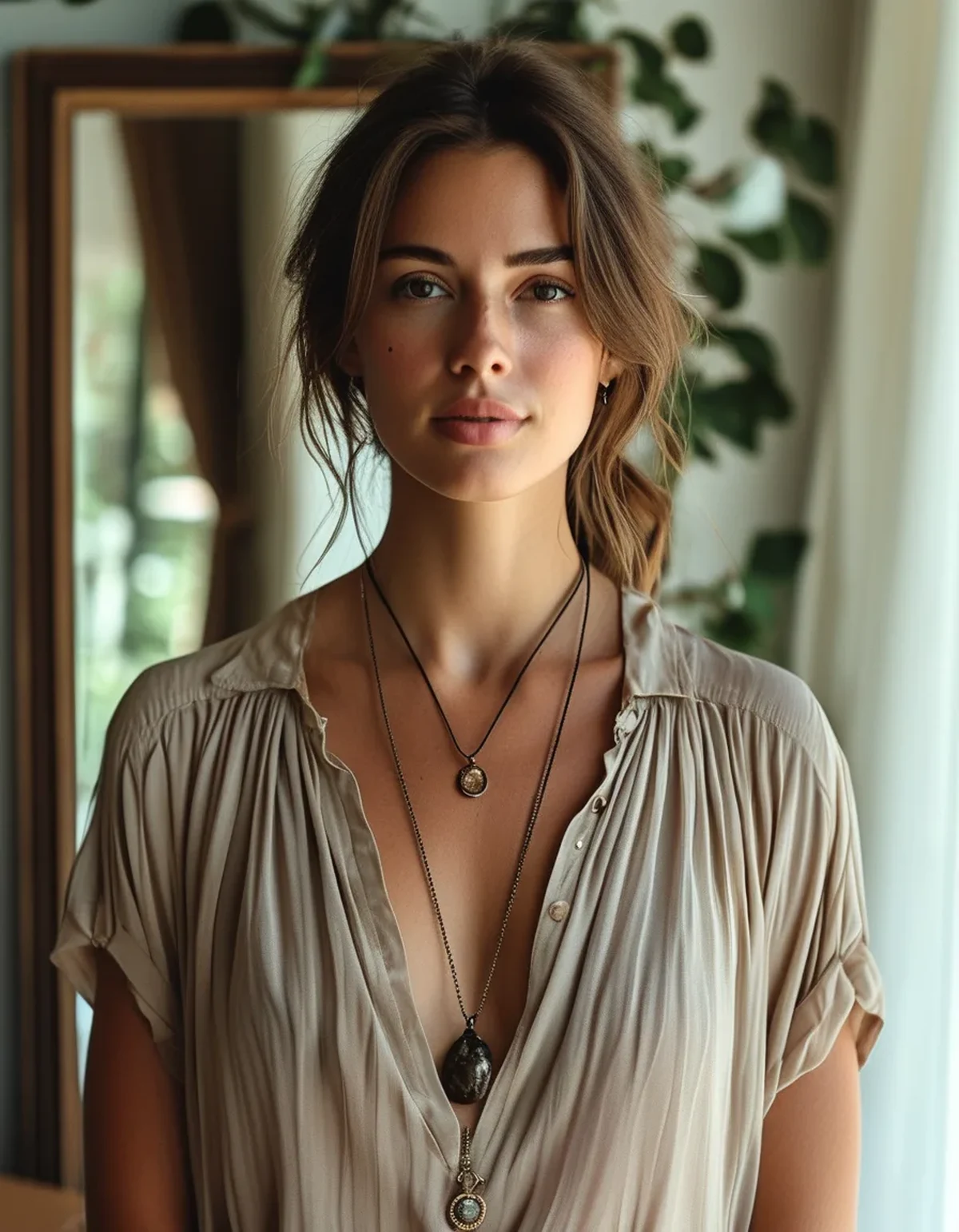
32 inches or longer for the strongest effect. This puts a pendant at or just below the natural waist and creates the longest continuous line. It works particularly well over a fitted top or a simple knit.
28 to 30 inches is the versatile middle. The pendant lands mid-torso, which still meaningfully lengthens without being dramatic, and it works under a jacket.
Under 20 inches — collar, choker, princess lengths — actively work against a short torso. They sit in the highest part of the torso zone and add a horizontal boundary exactly where you do not want one. This does not mean you can never wear them; it means they are working against you rather than for you, and you may want a different vertical element elsewhere.
Y-necklaces and lariats are the strongest option of all, because the drop continues below the point where a chain would loop. If you want the maximum effect from a single piece, this is the shape.
Layering multiple lengths creates a continuous vertical band — a 20-inch, a 26-inch, and a 32-inch worn together — which reads as one long element rather than three separate ones. This is the technique that actually looks styled rather than like a single long chain.
What Nobody Tells You About Combining This With the Rest
The necklace does not work in isolation, and a few combinations either amplify or cancel it.
Match the neckline. A V-neck or scoop already creates a downward vertical, and a long pendant continues it. A crew neck creates a horizontal at the collarbone, which a long necklace can override but has to work against. V-neck plus long pendant is the strongest pairing available.
Keep the top plain where the necklace falls. A busy print or a contrast panel competes with the line and the effect disappears. This is why the trick works best on solid, simple tops.
Do not add a belt at the same time. A belt is a strong horizontal at the waist, and it stops the eye at exactly the point the necklace was trying to reach. If you want both, use a belt that matches your top so the line is not interrupted by color.
Open layers stack with it. An open long cardigan or a duster creates two vertical lines at the sides; the pendant adds one in the center. Three vertical lines is a very strong proportional effect, and this combination is the reason that outfit formula gets recommended so often.
Tucking still matters. The necklace lengthens the torso zone visually; a high-rise bottom with a tuck raises the waistband and shortens it. Use one or the other deliberately rather than fighting yourself — a long pendant over an untucked top with high-rise bottoms is usually the best balance, because the untucked hem softens where the waistband sits.
How to test it in five minutes
Do this in front of a full-length mirror with your phone camera, because mirrors and photos disagree and photos are closer to how others see you.
1. Photograph yourself in a plain top with no necklace. This is your baseline.
2. Add a collar-length chain and photograph again. Most people are startled by how much shorter the torso reads.
3. Add a 30-inch-plus pendant and photograph again. Compare all three side by side on your screen rather than trying to judge from memory.
4. If you do not own a long necklace, improvise. Two shorter chains connected, or a long scarf tied to hang straight, will demonstrate the principle well enough to decide whether it is worth buying one.
The reason to use photos: in a mirror your eye goes to your own face and you evaluate details. In a photograph you see the overall shape, which is what actually determines proportion. It is a small difference and it changes the answer.
Once you have seen it, the rule is easy to carry: when the top half of an outfit is not working and you cannot say why, add vertical length down the center before you change the garment.
FAQ: Necklace Length and Proportion, Answered
Does this work if I have a fuller bust?
Yes, though a pendant may sit further forward and the line can break at the bust. A Y-necklace or lariat handles this better than a simple chain, because the drop continues past the widest point.
What about earrings — do they matter for torso length?
Not for torso length specifically, but long drop earrings add vertical length to the neck and face area, which contributes to the same overall impression. They stack well with a long pendant.
Is there a version of this for work or formal settings?
A simple long fine chain with a small pendant is quiet enough for almost any setting, and a long strand of beads reads as classic rather than trendy. The effect comes from the length, not from the size of the pendant.
TL;DR:
- The eye reads uninterrupted vertical distance as torso length; horizontal lines inside that zone shorten it.
- Necklaces under 20 inches add a boundary at the worst possible place — 28 to 32 inches or longer creates the line you want.
- Y-necklaces and layered lengths give the strongest continuous vertical.
- Pair with a V-neck and a plain top, avoid a contrasting belt at the same time, and stack with open long layers.
- Test with photos, not mirrors — photos show shape, mirrors show detail.
Before you buy another jacket in a different length, go find the longest necklace you own and take two photos. It is a five-minute test with a surprisingly large answer.
Keep Reading
This article is for general informational and styling purposes only. Fit, sizing, and product availability may vary.
